
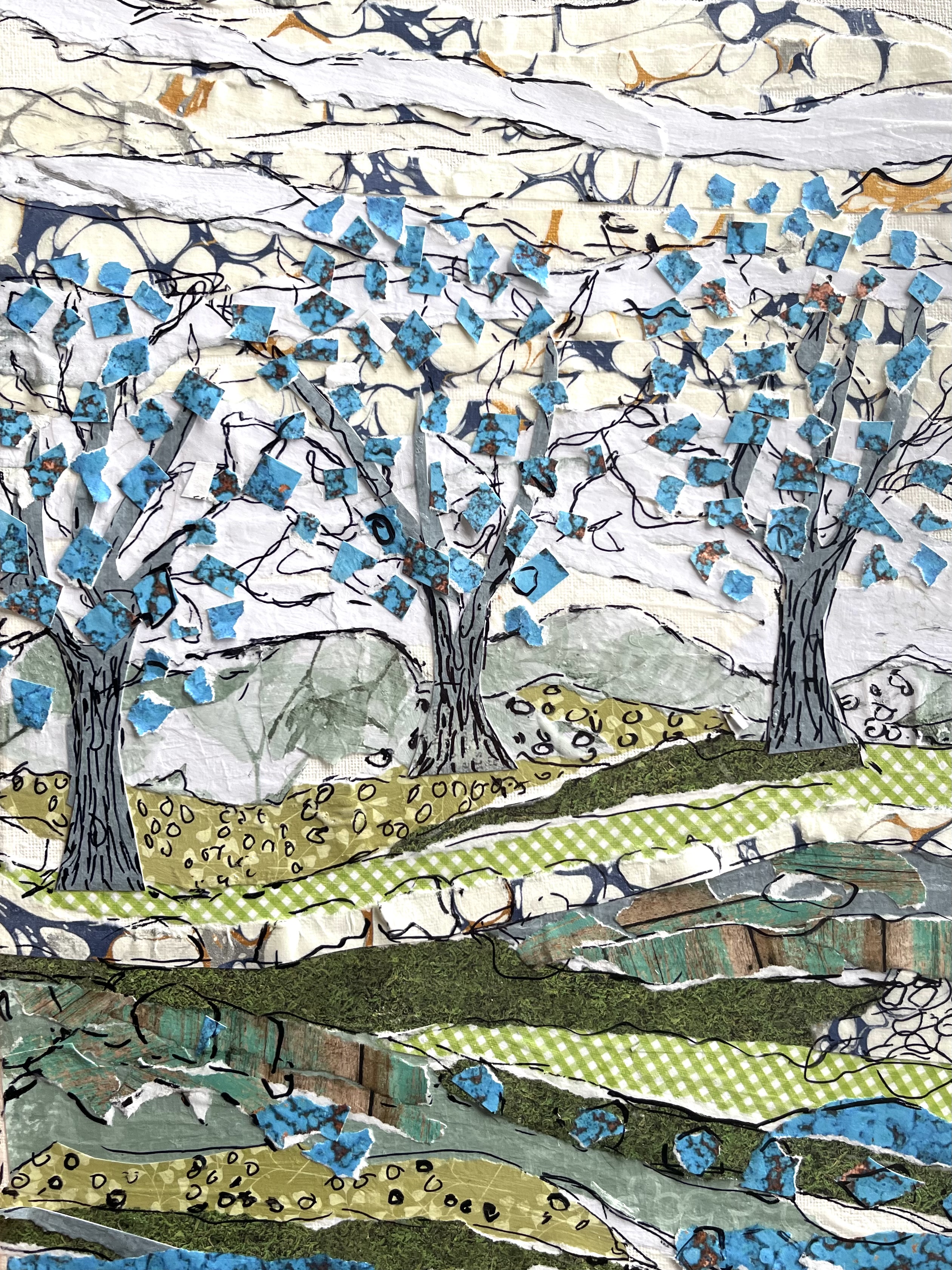
Torn Landscape is a class I developed last year and have taught at Sandwich Arts Alliance on Cape Cod and Plymouth Center for the Arts. In this introspective art class, students engage in a powerful exercise of self-discovery and emotional expression by tearing paper and then reconstructing it to symbolize their unique internal landscape.
The class begins with an invitation to consider the diverse elements that make up our inner world—thoughts, emotions, memories, aspirations, and even challenges.
I provide students with a vast selection of papers, of different textures, colors and patterns, encouraging them to think about how these materials could represent different aspects of their inner selves. The act of tearing the paper is a central and significant component of the process. Rather than precise cutting with a pair of scissors, tearing allowed for an organic, less controlled, and often cathartic release. This physical action serves as a metaphor for the breaking down of old patterns, the release of pent-up emotions, or the fragmentation of personal experiences. The sound of paper tearing and the visual outcome is calming and therapeutic.

Following the tearing phase, students move into the reconstruction portion of the class. Here, they are tasked with arranging and adhering their torn pieces onto a new surface, creating a visual representation of their “internal landscape.” This might involve piecing together fragments to symbolize healing and integration, layering different colors to express complex emotions, or leaving deliberate gaps to signify areas of growth or unknown potential.
Prompts are given that encourage reflection, such as: “What emotions are you giving voice to with these tears?” or “How does the way you reassemble these pieces reflect your journey of putting things back together?” The beauty of this exercise lay in its non-verbal communication, allowing students to convey intricate feelings and personal narratives that might be difficult to articulate verbally. This process is similar to the Japanese art of Kintsugi where pots are broken and then put back together using gold lacquer highlighting the transformation and beauty of the mended object. The creative process authenticates and validates our feelings and thoughts and allows them to sit quietly on the canvas providing clarity and a renewed sense of self.
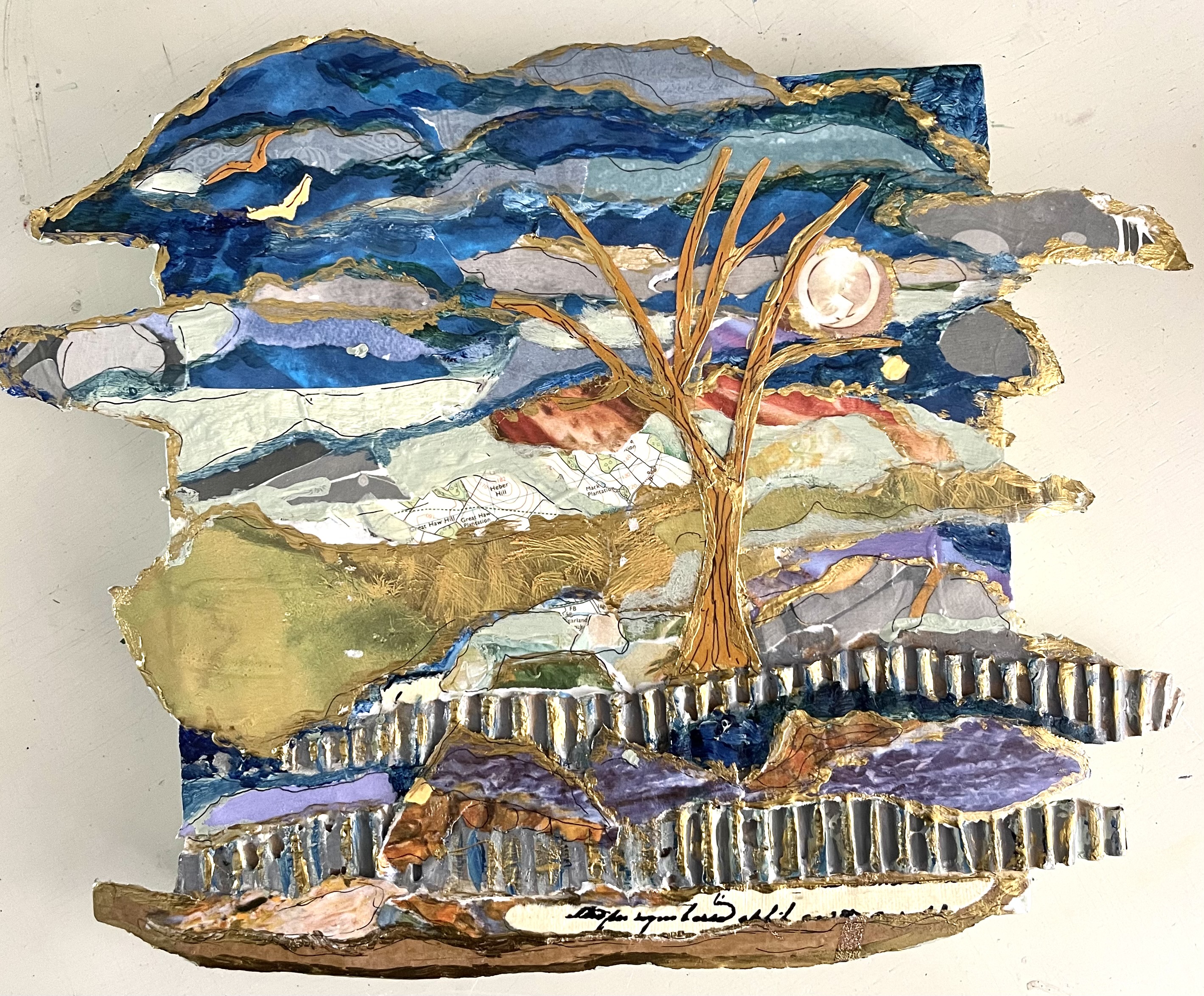
Next class will be taught at Plymouth Center for the Arts on Saturday February 28, 9.30am-11.30am.
and Sandwich Arts Alliance on Saturday 14 March, 9.30am-11.30am.


 Jacqui Hawk Art